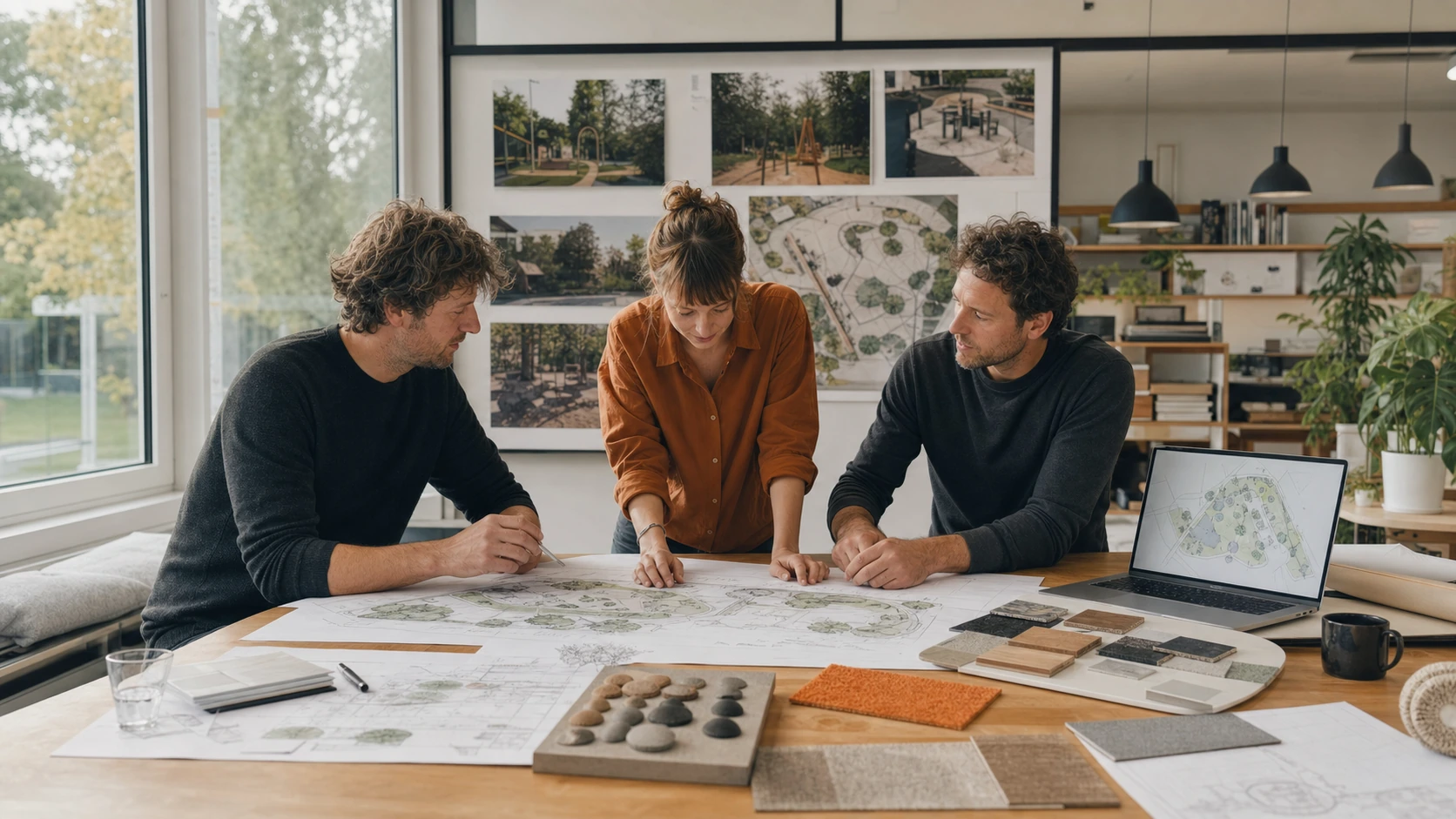
Begin with entry and circulation
A level approach, useful path widths and the absence of accidental thresholds often determine whether someone can use the space at all.
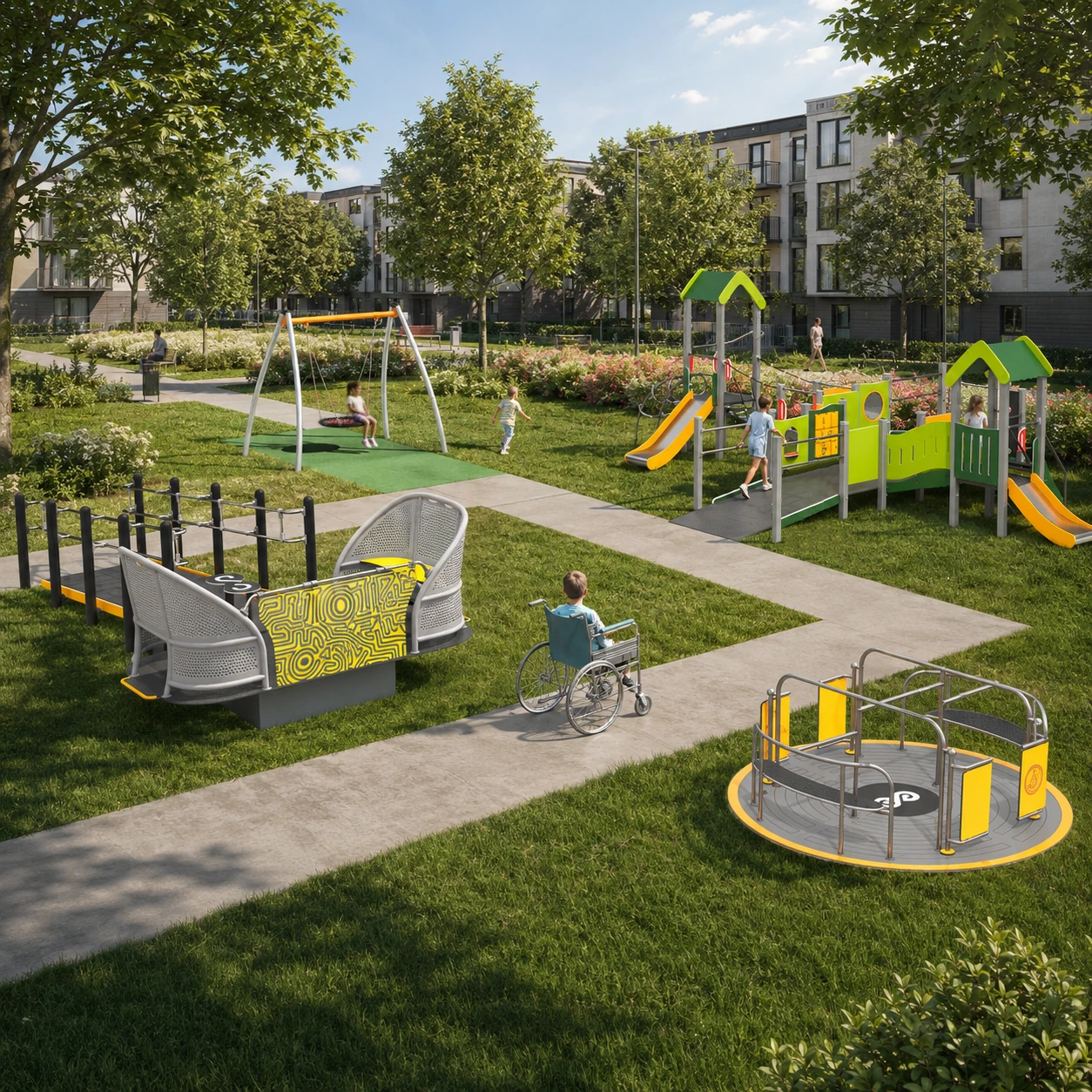
The layout should allow children and carers to move without conflict with high-energy activities such as swings or slides.
Offer different ways to participate
Combine movement, sensory activity, learning, social play and quieter options so people can join at different speeds and in different ways.
A good zone does not separate children into isolated groups. It creates shared play while allowing different interactions.
Include surfaces and rest
The surface affects movement, safety and carer comfort; boundaries and falls should be designed from the start.
Seating, shade, observation points and calmer pockets help families with different needs stay longer and use the space confidently.
Review the full user journey
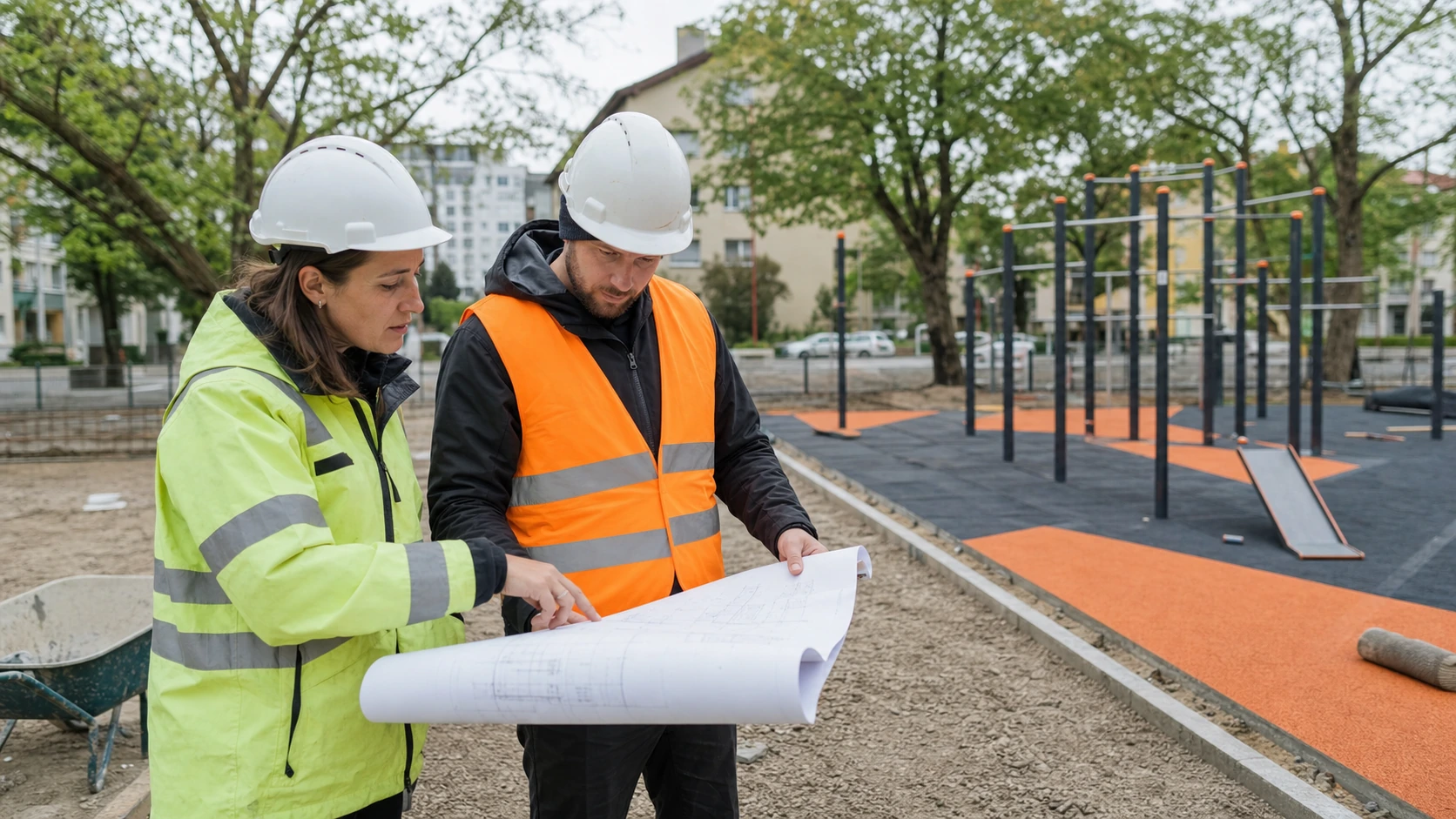
Walk through the concept from pavement or parking, through the entrance and equipment, to rest and exit.
This exposes barriers that a product list cannot show. Inclusion is a quality of the whole place.