

Sources checked: . Images show concepts or material details, not photographs of completed projects.
Observe the site throughout the day
A June 2026 IMGW report highlighted high temperatures and weather warnings. That is historical context, not today’s forecast. Map morning, midday and afternoon exposure. One photograph is not enough: ask the operator about seasonal use and have the designer assess routes and resting places.
Connect shade to real activities
Identify waiting, resting and circulation before choosing shade solutions. Include supports and fixings in the design, with attention to sightlines and equipment spaces. A shade element should work with service access and everyday use, not arrive as decoration after every other decision.
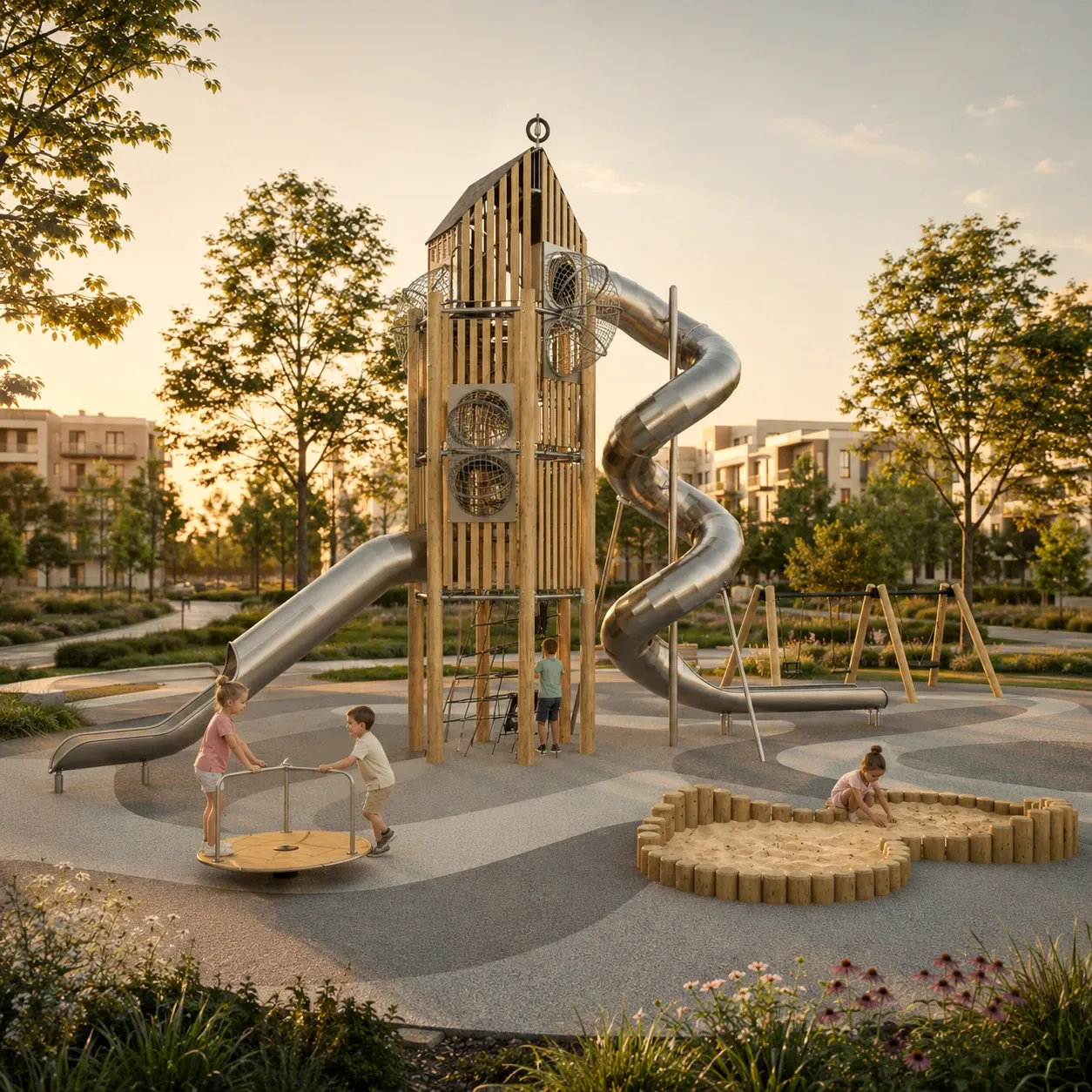
Plan planting and care together
Consider mature canopy, roots and maintenance access with the landscape professional. New planting will not immediately provide the same shade as an established tree. Discuss watering, leaves and route cleaning. Avoid creating hidden corners that make supervision harder.
Avoid unsupported colour claims
A surface colour alone does not prove its temperature in every condition. Request relevant evidence for specific performance claims. The surfacing solution must still match equipment requirements and the designer’s and installer’s specification. Combine technical, practical and visual decisions rather than relying on one marketing label.
Include seasonal operation
Prepare a short maintenance list for planting, shade structures, cleaning and areas where water collects. Establish who operates seasonal features. Send Safe Ground a site plan, photographs and peak-use information to discuss equipment, concept design and selected surfacing materials.
Before your next step
- Map sun exposure.
- Prioritise routes and rest.
- Plan planting care.
- Check material evidence.
Practical questions
Can a shade structure be treated as an independent extra?
Check every solution within the full arrangement. Supports, fixings, sightlines and maintenance access can affect the rest of the site. Include shade in the concept where possible; if introduced later, ask the responsible designer to review it. Site orientation and observations at different times are more useful than one photograph. Add waiting locations and existing and proposed plants. This information lets you compare options by everyday function rather than by the appearance of a single attractive concept image.


