

Sources checked: . Images show concepts or material details, not photographs of completed projects.
Overall height is not free fall height
Overall height describes the equipment’s envelope. Free fall height relates to the use situation identified in its documentation. Do not estimate it from a roof or highest component. Record the exact model, drawing, stated free fall height and relevant spaces, including different platforms and climbing elements.
HIC is not a thickness specification
HIC is a criterion used to assess head-impact effects during surfacing testing. Critical fall height is a result for the tested surface and method. Commercial shorthand can blur the distinction: check what each number means and its units. A material catalogue is not a test report for the complete assembly.
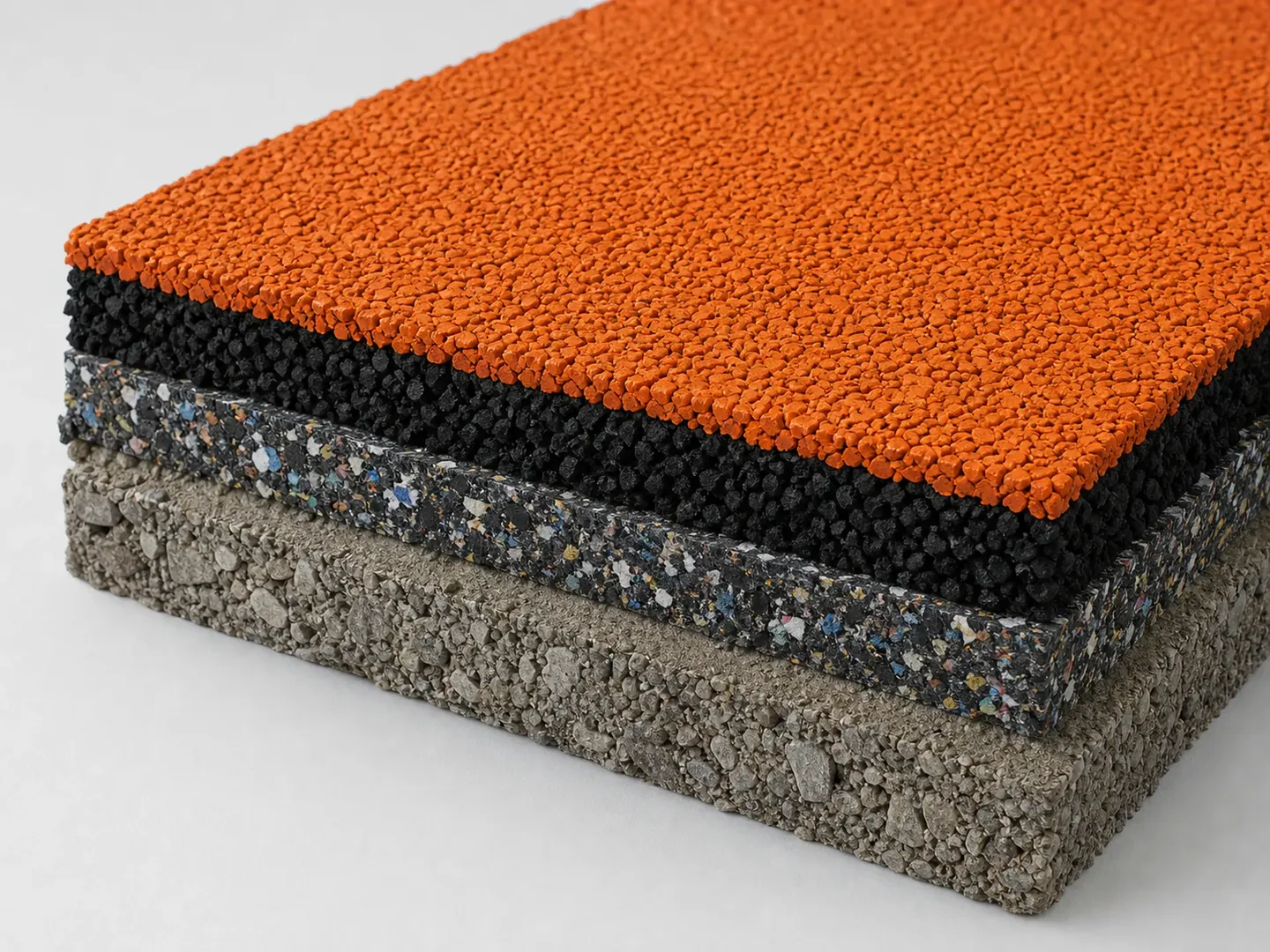
Check the tested scope
PN-EN 1177 describes test methods for impact-attenuating surfacing. Identify the tested system, layers and conditions. A component statement cannot automatically be extended to the finished surface. Changes to substrate, component or layer arrangement need review by the professionals responsible for design and execution.
Put requirements on the plan
Connect each equipment area to a requirement and surfacing solution. Colour boundaries are not necessarily requirement boundaries. Note construction stages and interfaces if delivery is phased. Keep a record of equipment substitutions, which may require a new layout check.
Use the actual standard edition
PKN listings checked for this guide include PN-EN 1176-1+A1:2024-03 and PN-EN 1177+A1:2024-05, not invented “2026 standards”. Confirm the status and relevant parts before specification. Send Safe Ground the model, free fall height and designer’s specified system; installed-surface assessment remains a separate project stage.
Before your next step
- Read free fall height separately.
- Identify the exact model.
- Check system documentation.
- Plan the on-site assessment.
Practical questions
What if a required parameter is missing?
Mark it for confirmation and request documentation for the exact model. Do not fill a gap with data from a similar-looking structure. Connect the equipment, its requirements and the surface solution in one schedule. Tell the designer and installer about every model change, as zones and surfacing may need review. Confirming this before purchase is easier than correcting a final material list. Drawings and documents should describe one approved configuration rather than several competing versions in project emails.